Duration
Funding
Initiative
Budget
Team members
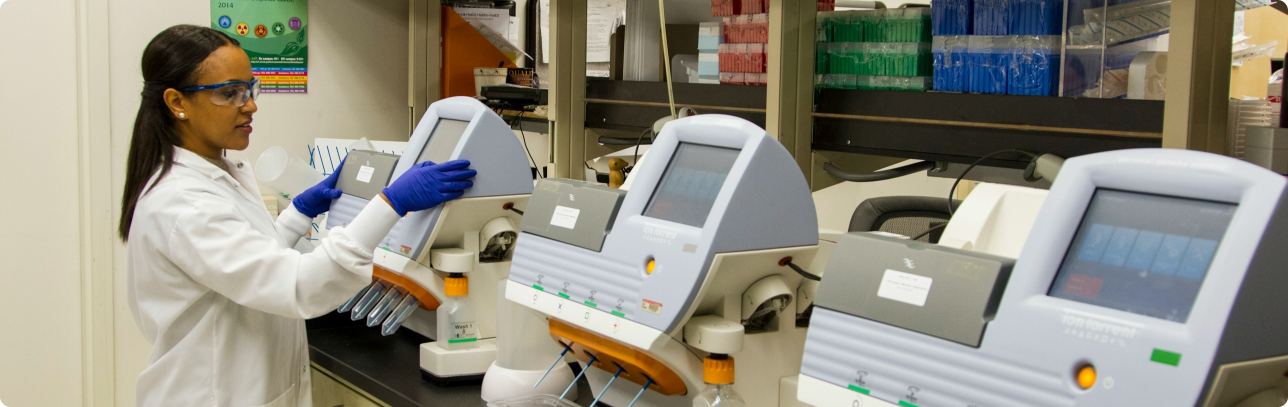
This project aimed to systematically assess communicable disease surveillance systems across 11 countries in the WHO South-East Asia Region. The assessment focused on mapping the structure, functionality, and operational capacity of indicator-based surveillance systems and identifying gaps that may affect their ability to support timely detection and response to emerging health threats. By generating a comprehensive regional evidence base, the study supports WHO and member states in developing strategies to strengthen surveillance infrastructure, improve data flows, and enhance regional health security.
Countries within SEARO operate in diverse epidemiological and operational contexts, ranging from highly decentralised health systems to settings with limited digital infrastructure. Differences in reporting pathways, data integration mechanisms, and surveillance coverage create inconsistencies in how disease information is captured and used for decision-making. In addition, fragmented systems and limited interoperability between programmes can hinder the ability to generate a unified understanding of disease trends across the region. Addressing these challenges required a structured, comparative assessment that could capture both country-specific realities and regional patterns.
CDPH designed and implemented a comprehensive assessment framework that combined document review, structured system mapping, and stakeholder consultations across participating countries. The methodology focused on evaluating surveillance system components including reporting architecture, data collection processes, governance structures, analytical capacity, and information dissemination mechanisms. By synthesising evidence from multiple sources, the project created a structured comparative analysis of surveillance practices across the region, enabling identification of shared strengths, systemic gaps, and opportunities for harmonisation.
The study was conducted using a hybrid methodology that integrated desk-based research with remote consultations involving national and regional stakeholders. Country-level information was compiled from official reports, surveillance guidelines, and operational documents, while interviews and discussions with program experts provided contextual insights into how systems function in practice. The collected data was analyzed using a structured evaluation framework aligned with WHO surveillance standards, ensuring comparability across countries while allowing for contextual interpretation.
CDPH served as the technical and analytical lead for the regional assessment. The organisation was responsible for developing the study framework, conducting data collection and analysis, synthesising regional insights, and translating findings into practical recommendations for strengthening surveillance systems. Through close coordination with WHO SEARO and national stakeholders, CDPH ensured that the outputs remained both scientifically rigorous and operationally relevant for public health decision-making.
The insights generated through this regional assessment provide a foundation for strengthening communicable disease surveillance across the WHO South-East Asia Region. The findings can inform future investments in surveillance infrastructure, digital health integration, workforce development, and cross-country collaboration. Strengthening these systems will be essential for improving preparedness, accelerating outbreak detection, and supporting coordinated responses to future public health emergencies.
The project produced one of the most comprehensive regional mappings of communicable disease surveillance systems within the WHO South-East Asia Region. The findings provide WHO and member states with a clearer understanding of surveillance strengths, operational challenges, and priority areas for improvement. By identifying opportunities to improve data integration, reporting timeliness, and analytical capacity, the assessment supports the development of more resilient surveillance systems capable of detecting and responding to emerging public health threats.

COVID Today was developed by a multidisciplinary group of clinicians, researchers, data scientists, engineers, and student volunteers working under the India COVID Apex Research Team (iCART). Bringing together expertise from leading institutions and global technology organizations, the team combined epidemiological insight with advanced data analytics and robust technical infrastructure.
Dr Mohak Gupta, MBBS, AIIMS Delhi.
Technology and Data-driven Solutions in Healthcare
Saptarshi Mohanta (Rishi), BS-MS, IISER Pune.
Machine Learning, Deep Learning, Data Applications and Analytics
Aditya Garg, B.Tech CSE, VIT Vellore
Content Creation
Abhinav Gupta, CA Inter, B.Com
Simplifying Complex Structures with Technology
Apurva Thakker, B.Tech CSE, BFCET Bathinda
Solving Problems through Technology
Siddharth Jain, Integrated B.Tech-MBA, IIIT Gwalior.
Data Analysis, Machine Learning